
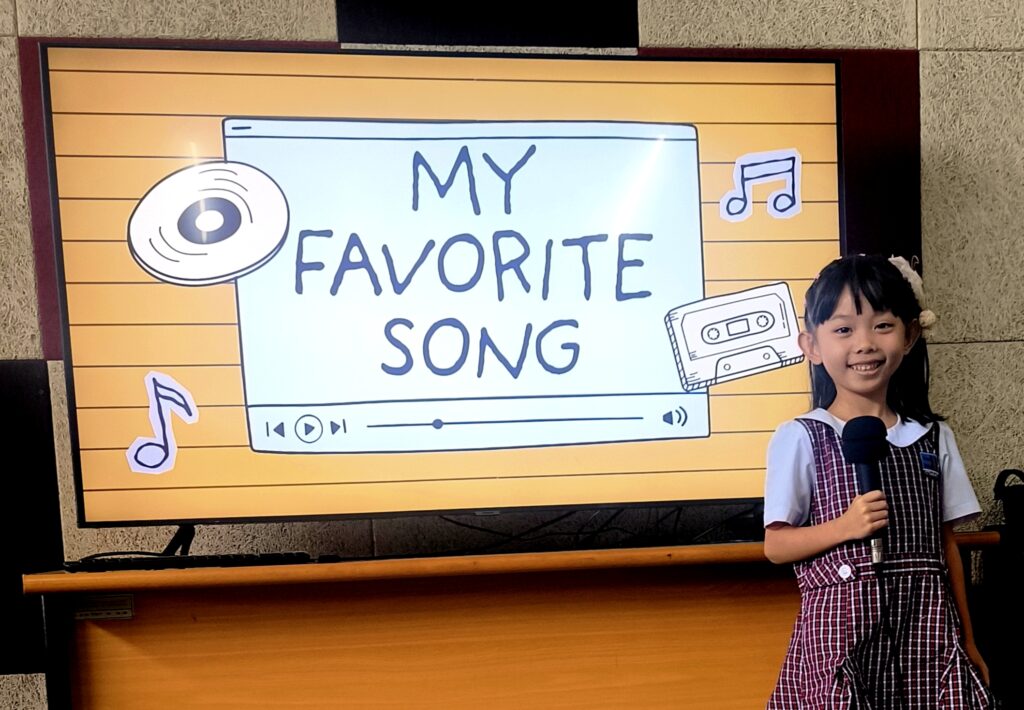

At Cita Hati, we believe that learning about personal identity begins with something very simple: giving children the space to share who they are. In Grade 1, this can happen in the most joyful and unexpected ways. Sometimes, through a favorite song.
As part of their Personal Identity Unit of Inquiry, our young learners are invited to explore a question that sounds simple but opens the door to something much deeper: What makes me, me? One of the ways they explore this is by presenting their favorite song to their classmates.
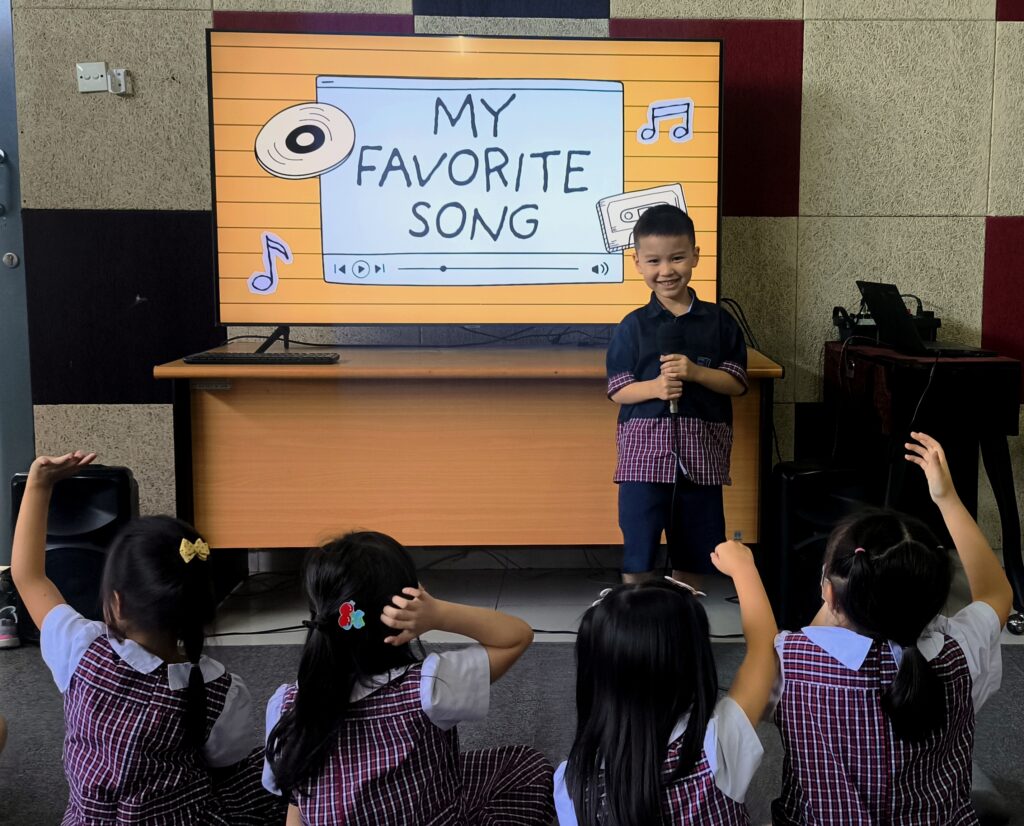
For some children, their favorite song may be a song they love to sing. For others, it may be a song that makes them want to dance, a song that reminds them of someone they love, or simply a song that makes them feel happy. And that is precisely where the learning begins.
More Than Just a Song
When children talk about their favorite songs, they are not simply talking about music. They are sharing a small part of themselves.
A song can reveal preferences, feelings, memories, personalities, and even the way a child experiences the world. One student may be drawn to the lyrics because the words mean something to them. Another may love the melody. Someone else may not even know what the song is about and they simply love the vibe and cannot stop dancing when it plays.
This reminds us that music is wonderfully complex. Not every feeling can be explained through words, and not every reason for loving something needs to be the same.
Through these presentations, our students begin to discover that identity can be expressed in many different forms. Sometimes, who we are is revealed not through what we say, but through what we choose, what we enjoy, and what makes us feel something.
Becoming Thinkers Through Different Perspectives
The Favorite Song activity also gives our Grade 1 students an opportunity to develop the IB Learner Profile attribute of being Thinkers.
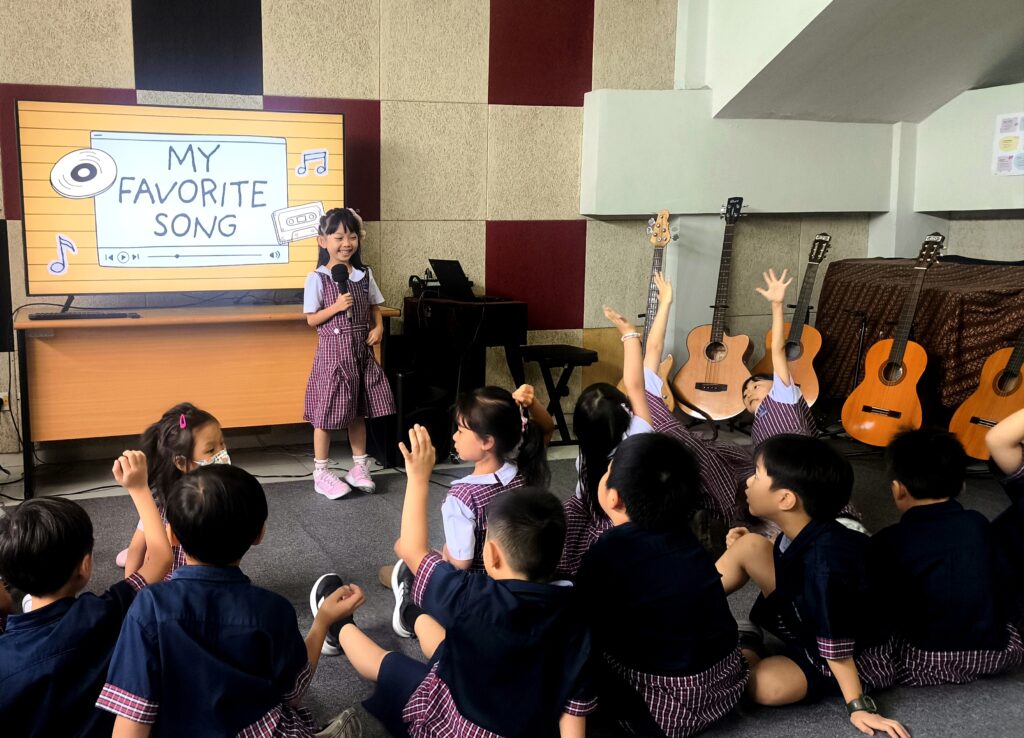
As they listen to their classmates’ presentations, students are encouraged to look beyond their own preferences. They begin to ask questions such as, “Why does my friend like this song?” or “What makes this song special to them?”
Perhaps a classmate loves a song that they have never heard before. Perhaps they do not understand why someone would choose that particular song. And that is okay.
The learning is not about deciding which song is “better.” Instead, students are learning to recognize that people can experience the same world in very different ways.
By listening carefully and considering another person’s perspective, our students begin to move beyond simply noticing differences. They begin to understand why differences exist and why those differences make each person unique.
Reflecting on What Makes Us Unique
The experience also invites students to become Reflective learners.
After sharing their favorite songs, children have the opportunity to think about their own choices: Why did I choose this song? What does it say about me? Has my thinking changed after hearing my friends’ choices?
These may seem like small questions, but for a young learner, they are important steps toward understanding personal identity.
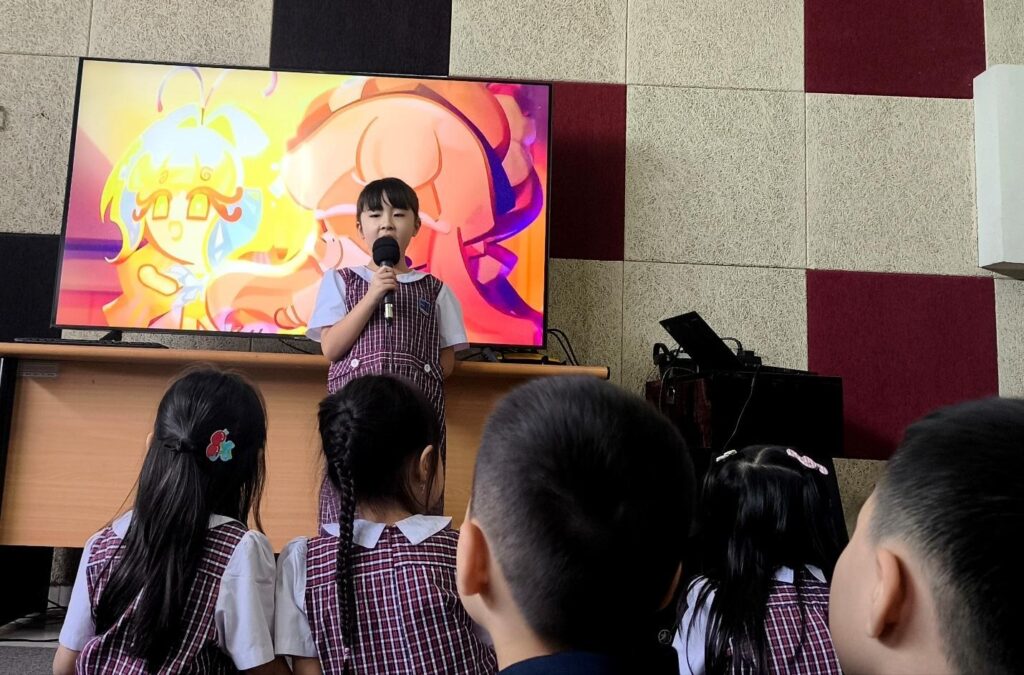
Students begin to recognize that their preferences are part of who they are, while also discovering that their friends may have completely different preferences. Some children may love energetic songs, while others prefer something calm. Some may enjoy singing every word, while others simply want to move their bodies and dance.
There is no single “right” way to enjoy music.
Celebrating Differences Through Music
Perhaps one of the most meaningful lessons from this experience is that difference does not have to divide us, it can help us understand one another. When a child listens to a classmate share a song they do not personally like, they are given an opportunity to practice something much bigger than music appreciation: respect.
They learn that “I don’t like this song” can exist alongside “I understand why you love it.”
That small shift in thinking is powerful. It teaches children that appreciating someone does not require having the same preferences, opinions, or experiences. In a classroom filled with different voices, personalities, cultures, and preferences, every favorite song becomes another piece of the bigger picture of who we are.
When Music Says What Words Cannot
Music has a unique way of communicating.
Sometimes, we cannot quite explain why a particular song makes us happy. Sometimes, we hear a rhythm and our bodies simply want to move. Sometimes, a melody reminds us of a special moment. And sometimes, we just love a song because it makes us feel something.
For our Grade 1 learners, this is an important discovery: not everything we feel or value can be expressed perfectly through words.
Through their Favorite Song presentations, children are learning to express themselves, listen to others, reflect on their own identity, and appreciate different perspectives.
What begins as a simple question “What is your favorite song?” becomes an invitation to explore something much deeper:
Who am I? What makes me unique? How are my friends different from me? And how can I celebrate those differences?
At Cita Hati, we believe that every child has a story worth hearing. Sometimes, that story is told through words. Sometimes, through movement. And sometimes, it begins with a song. Because when a child shares the music they love, they are sharing more than a favorite song.
They are sharing a little piece of who they are. (Rionaldus S.B)